

Deposit acquisition has become more competitive as consumers face endless choices, higher expectations from financial institutions (FIs) and a growing willingness to reconsider their primary financial institution as new offerings land on the market. Promotional offers can still attract attention, but long-term growth depends more on delivering experiences that make customers want to stay.
To better understand what drives people to open a new checking account, Vericast surveyed 1,000 U.S. adults in June 2026 about the factors influencing their account considerations, switching behaviors and offerings they find most valuable.
Loyalty Still Has to Be Earned
Vericast survey results show that checking account switching is not a given. If presented with an incentive to switch checking accounts, roughly a quarter (26%) of survey respondents would not be tempted. However, some incentives are more appealing to survey respondents than others.
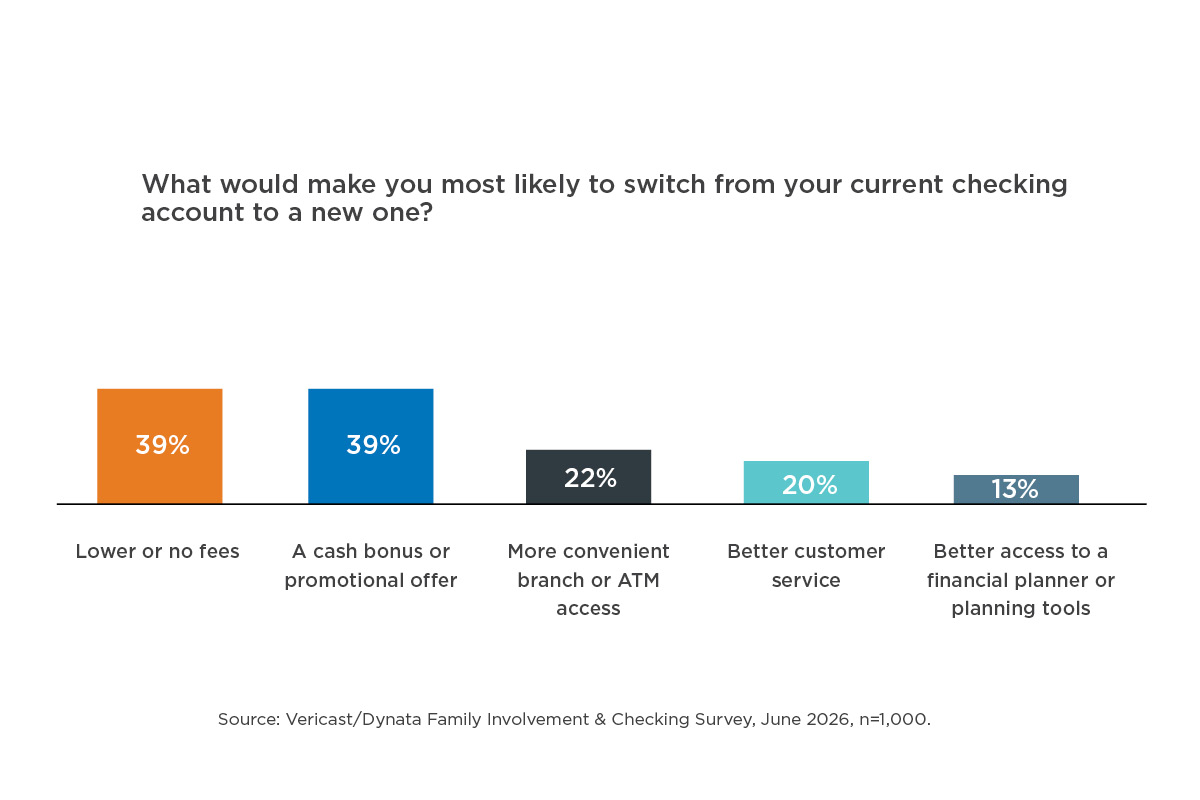
Lower fees and cash bonuses ranked as the top incentives that would influence survey respondents’ decision to switch checking accounts. Preferences varied across generational survey respondent groups with Gen Z (38%) and Millennials (48%) more likely to rank cash bonuses as a primary reason for making the leap, while Gen X is more likely to prioritize lower or no fees, and Boomers (34%) more likely to look for better rewards. While half of Boomers said they would not switch checking accounts, the overall findings suggest that value, convenience and relevance can influence account consideration across the consumer base.
While cash incentives remain an effective way to spark consumer consideration, they should be considered part of a larger retention strategy to keep account holders in the door beyond the initial draw. Long-term loyalty is contingent on sustaining consistent, personalized experiences and ongoing value once accounts are opened.
The Need for Speed & Personalization Has Reached Banking
Once consumers decide to open an account, their expectations shift to “How quickly can I start banking?” The account opening experience is a growing competitive differentiator for FIs. In an age where many banking partners have comparable offerings, differentiation is key to acquiring and retaining customers. Across industries, consumers have grown accustomed to immediate access to things they want, and the survey findings suggest banking is no different.
At the same time, instant issuance reduces one of the final friction points in the account opening process. Customers do not have to wait for days to begin using a new account, they can instead immediately make transactions, which reinforces positive first impressions while solidifying engagement.
Instant issuance would make an account more appealing or influence institution choice, especially for younger survey respondents.
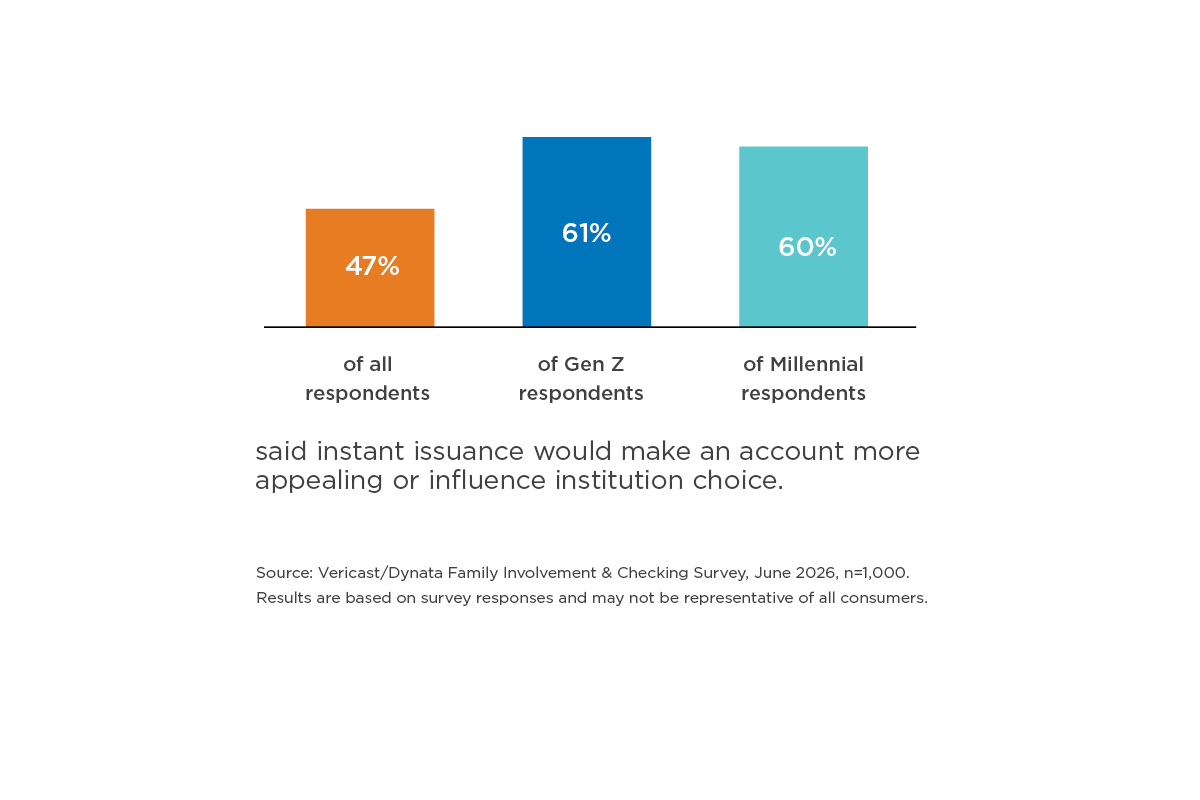
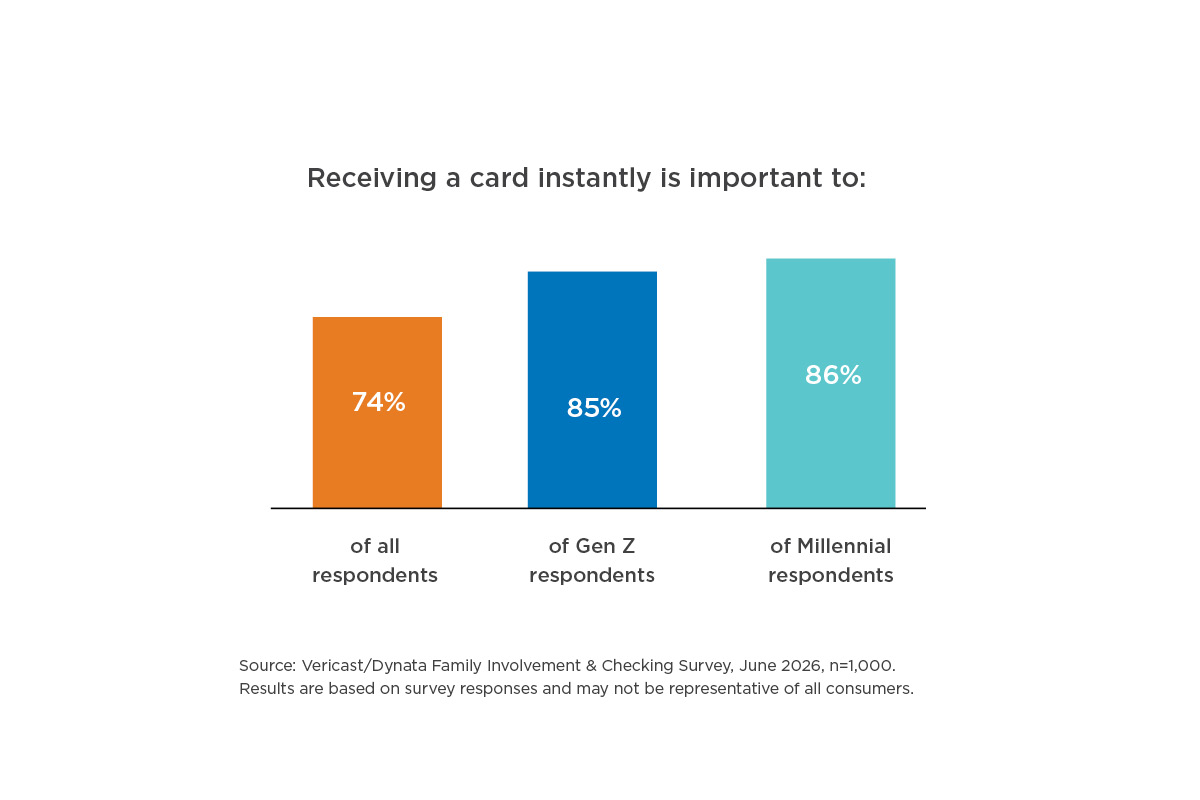
Out of all the surveyed respondents, only 6% would prefer waiting for their card in the mail, demonstrating that if the option is there to receive cards instantly in-branch, the majority prefer the convenience. At a time when consumer expectations are high, instant issuance can help FIs provide timely access and a smoother account-opening experience.
Aside from instant issuance being a must-have capability, it creates additional opportunities to build trust. While they are largely viewed as a convenience offering, instant issuance cards can also be a solution to stressful situations, like replacing a lost or stolen card. These moments can more easily be remedied when FIs issue a new card to those customers from their local branch rather than having to wait up to a week or more for a new one to come in by mail. Expediency in emotional scenarios allows FIs to show up for their customers and provide opportunities to build interpersonal, long-lasting banking relationships.
Beyond speed, personalization is also an edge consumers are accustomed to. Almost half (48%) of Gen Z respondents say getting a customizable card design would make them more likely to open a checking account, with 35% being interested in card designs that reflect their personal interests or lifestyle. Product customization is one way to build consumer relationships, but personalization should also recognize individual preferences in product messaging, communication channels and more. For FIs, these personalized interactions and products can help make the relationship feel more relevant and natural.
Consumers have more banking choices than ever, but they are also clear about what influences their decisions. Competitive incentives may create initial consideration, but long-term relationships are built through frictionless experiences and personalization. Financial institutions that combine targeted acquisition strategies with seamless onboarding and relevant engagement may be better positioned to find the sweet spot for both new accounts and lasting loyalty.
Data Source: Vericast/Dynata Family Involvement & Checking Survey, June 2026, n=1,000. Percentages by generation are directional and subject to sample-size limitations. For this survey, the breakdown by generation is as follows: Born 1945 or earlier: 24, Baby Boomers (1946-1964): 193, Gen X (1965-1980): 265, Millennials (1981-1996): 326, Gen Z (1997-2012): 192.